Skyblog · U.S. getaways
Boston's Freedom Trail: How to Walk It and Plan a First Visit
The Freedom Trail is a 2.5 mi red-brick line through Boston's revolutionary sites. Here is how to walk it, where to start and what to book.
Published November 20, 2026
Why the Freedom Trail works for a first visit
Boston packs an unusual amount of American history into a few walkable neighborhoods, and the Freedom Trail is the thread that ties it together. The National Park Service describes it as a red brick or painted line that winds through downtown Boston, the North End and Charlestown, about 2.5 mi in all. You do not need a ticket to walk the trail itself, which is outdoors and open all year. You only pay for the individual sites that charge admission.
Most of the trail belongs to Boston National Historical Park, a collaboration of federal, city and privately run sites tied to the colonial struggle for independence. That mix explains why some stops are free and others are not. The sites run by the National Parks of Boston are free and open to the public, while several nonprofit and partner sites set their own admission.
Where to start and how long it takes
Start at either the Faneuil Hall Visitor Center, on the first floor of Faneuil Hall, or the Charlestown Navy Yard Visitor Center. Both offer maps, and park rangers and volunteers can help you plan the day. Faneuil Hall also has free restrooms in the basement and on the second floor.
Walking the whole trail without stopping takes about an hour and a half. The NPS adds that every stop can add 20 to 40 minutes, depending on how long you spend inside, so a first visit with several sites easily fills most of a day. If your time is short, walk one section well rather than racing the full line: the downtown stretch, the North End, or Charlestown.
What to see along the way
Old South Meeting House: the hall where thousands gathered in protest before the Boston Tea Party.
Old State House: the building that housed the royal colonial government, overlooking the site of the Boston Massacre.
Faneuil Hall: known as the "Cradle of Liberty," still an active place for meetings and debate.
Paul Revere House: the oldest building in downtown Boston and the family home of Paul Revere during the Revolution.
Old North Church: Boston's oldest standing church, made famous by Longfellow's poem about the midnight ride.
Bunker Hill Monument: marks the first major battle of the Revolution. Reaching the observation deck takes 294 steps, and the NPS says most visitors need about 20 minutes to go up and down, including a look out of the windows at the top.
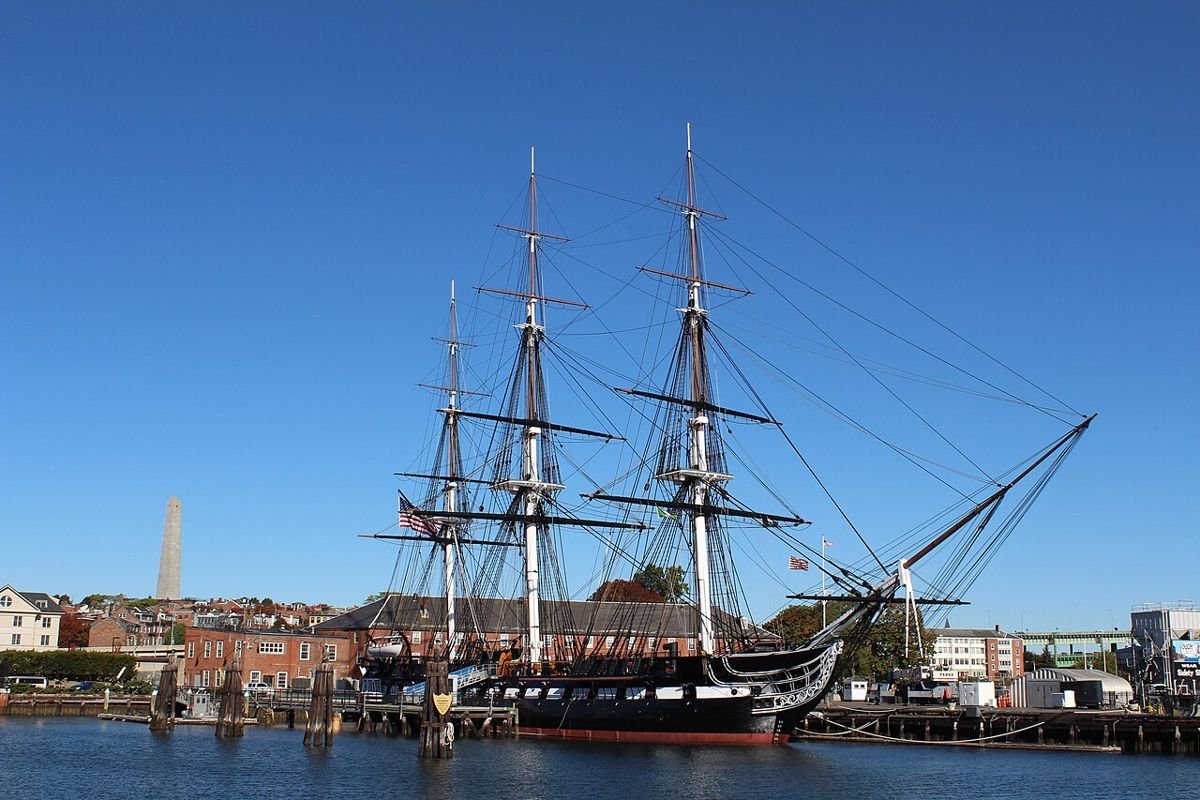
USS Constitution and the Charlestown Navy Yard: "Old Ironsides," the oldest commissioned warship in the U.S. Navy, with the USS Constitution Museum nearby.
Make a full day of it
A simple plan is to begin at Faneuil Hall, follow the line north through the North End to the Paul Revere House and Old North Church, and cross to Charlestown for Bunker Hill and the ship. Add a ranger program or one museum, and leave time to eat in the North End.
For a second angle on the city's history, the National Parks of Boston also care for the Black Heritage Trail and the Museum of African American History at Boston African American National Historic Site. It is a separate walk, and a good companion to the Freedom Trail if you have more than a day.
Plan your visit
The NPS strongly suggests using public transit, since driving in Boston can be difficult and there is no parking at or around Faneuil Hall. The closest subway stops to Faneuil Hall are State Street on the Orange or Blue Line, Government Center on the Green Line and Park Street on the Red Line, all under a 15-minute walk. Choose a hotel close to a subway stop and walk or ride between sections. The trail is fully accessible, but it includes uneven pavement. Some bricks may be loose, and the surface can be slippery when wet, so wear comfortable shoes. The trail takes stairs in two places, and both USS Constitution and the destroyer USS Cassin Young require climbing steps to board.
Self-guided help is free. The NPS mobile app includes a Freedom Trail audio tour, and audio tours are also available in Spanish and French. Site hours vary by season and by organization, so check each site you plan to enter before you go.
A second day in Boston's national parks
Boston is a national park city. The National Parks of Boston include three units: Boston National Historical Park, which holds the Freedom Trail, Boston African American National Historic Site, which holds the Black Heritage Trail, and Boston Harbor Islands National and State Park, a partnership of 34 islands. If you have more than a day, add the Black Heritage Trail or take a ferry to the islands for a different side of the city.
The park also offers free self-guided audio tours and ranger programs, which are a good way to add context to the stops you walk past. Pick one program, book it if booking is needed, and build the rest of your day around it.
Frequently asked questions
Is the Freedom Trail free?
Walking the trail is free. NPS notes that some sites along it charge admission, while the sites operated by the National Parks of Boston are free and open to the public.
How long is the Freedom Trail?
About 2.5 mi, marked by a red brick or painted line. NPS says it takes about an hour and a half to walk it without stopping at individual sites.
Where should I start?
At the Faneuil Hall Visitor Center or the Charlestown Navy Yard Visitor Center. Both have maps, and rangers and volunteers can help plan your route.
Do I need a car?
No, and NPS suggests against driving because it can be difficult in Boston. Public transit and walking cover the trail and the neighborhoods around it.
Sources
- Basic Information · National Park Service
- Places To Go · National Park Service
- Things To Do · National Park Service
- Boston's Trails of Freedom · National Park Service
- Frequently Asked Questions, Boston National Historical Park · National Park Service
- Directions, Boston National Historical Park · National Park Service