Skyblog · U.S. getaways
St. Augustine, Florida: The Castillo, Fort Matanzas and America's Oldest City
Founded in 1565, St. Augustine is the oldest continuously occupied European settlement in the continental U.S. How to see its two Spanish forts and old town.
Published November 17, 2026
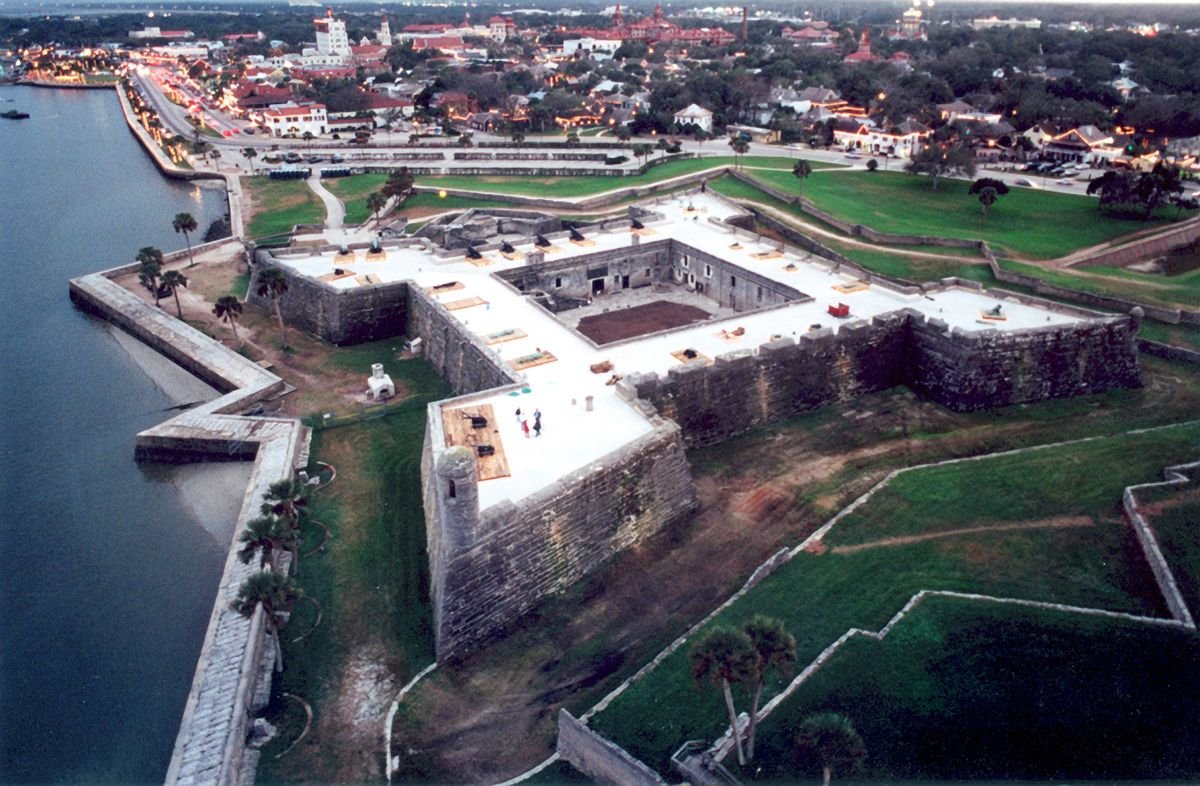
On a September day in 1565, the Spanish explorer Pedro Menéndez de Avilés sailed into Matanzas Bay and founded St. Augustine. That was 42 years before the English colonized Jamestown and 55 years before the Pilgrims landed at Plymouth Rock. Today, according to the National Park Service, it is the oldest continuously occupied European settlement in the continental United States.
What makes St. Augustine special is how much of that story you can still walk through. A massive stone fortress guards the bay, a 16th-century plaza still sits at the center of town, and a second Spanish fort waits a short boat ride away to the south. Here is how to see it all.
Castillo de San Marcos: the oldest masonry fort in the continental U.S.
Built by the Spanish to defend Florida and the Atlantic trade route, the Castillo de San Marcos is the oldest masonry fortification in the continental United States. Construction began in 1672 and was completed in 1695, using coquina, a stone made of shells quarried nearby. The park that protects it interprets more than 450 years of cultural intersections.
The Castillo is open seven days a week except Thanksgiving Day and Christmas Day. First admission is at 9 a.m., last admission at 5 p.m., and visitors must exit by 5:15 p.m. Allow time to climb to the gun deck for views over Matanzas Bay, but note that it closes during thunderstorms because of lightning.
An entrance pass is required, and the park is cashless, so plan to pay by card. A busy Saturday brings around 3,500 visitors, so arrive early on weekends and holidays. The quietest stretch of the year is mid-September through mid-November.
Walking the old town
St. Augustine's historic district, a National Historic Landmark, is the earliest surviving example of a European planned community laid out as a 16th-century Spanish colonial town, with gridded streets and a central plaza. The Plaza de la Constitución, dating to the 16th century, still anchors the town and is the natural starting point for a walk.
From the plaza, narrow and sometimes winding streets lead past nearly 300 years of architecture. The early Spanish colonial buildings are the most famous, but you will also find buildings from the Territorial Period of 1821 to 1845, the Flagler Era of the 1880s and 1890s, and the Florida Boom of the 1920s. It is a compact area, and the best way to see it is slowly, on foot, with time to stop.
Fort Matanzas: a boat ride to a Spanish watchtower
South of town, Fort Matanzas National Monument preserves a fortified coquina watchtower completed in 1742 to defend the southern approach to St. Augustine. The park also protects coastal dunes, marsh and maritime forest, with a nature trail to explore while you wait for the boat.
There is no fee to enter the park or to ride the ferry to the fort. Boarding passes are handed out at the Fort Matanzas Visitor Center, not the city's visitor center, on a first-come, first-served basis, and everyone in your group needs one. Plan carefully: there is no ferry service on Tuesdays and Wednesdays.
The parking lot, built in 1936, is small and fills quickly, so come early in the day or on a weekday. The visitor center, dock, nature trail and boat are wheelchair accessible, but the fort itself is reached by a stairway of 15 steps, and the park recommends avoiding loose or high-heeled shoes because of the stairs and a ladder.
Getting there and when to go
St. Augustine sits on Florida's northeast Atlantic coast, about midway between Jacksonville and Daytona Beach, both of which have international airports with easy access to I-95. Rental cars are available at the airports and in St. Augustine. From I-95, take exit 318 for the historic sites and downtown, then follow the signs to the Castillo, which sits on A1A in the heart of town. The city runs a paid parking lot in front of the fort and a parking garage a short walk away.
The most comfortable seasons are fall and spring, when temperatures regularly hover around 21 to 26°C. Winters are generally cool to mild with occasional cold spells, so pack a jacket. Summers are hot and humid with frequent afternoon thunderstorms, and June through November is hurricane season, so check for tropical storms before you travel. Visitation peaks around Christmas and New Year's, during school breaks and on weekends.
A simple two-day plan
Day one: be at the Castillo de San Marcos for first admission at 9 a.m., then spend the afternoon walking out from the Plaza de la Constitución through the old town's narrow streets.
Day two: drive south to Fort Matanzas early to collect your free boarding passes before the small parking lot fills, ride the ferry to the watchtower, and walk the nature trail through the dunes and maritime forest. Just remember to avoid Tuesdays and Wednesdays, when the ferry does not run. If you are visiting in October, November or from February to May, expect school groups at the Castillo and plan your arrival accordingly.
Frequently asked questions
Is St. Augustine the oldest city in the United States?
According to the National Park Service, St. Augustine, founded in 1565, is the oldest continuously occupied European settlement in the continental United States. It was established 42 years before Jamestown and 55 years before the Pilgrims landed at Plymouth Rock.
How long do you need at the Castillo de San Marcos?
Leave time to explore the rooms and climb to the gun deck. The Castillo opens daily for first admission at 9 a.m., with last admission at 5 p.m., and is closed on Thanksgiving Day and Christmas Day. Arrive early on weekends, when crowds are largest.
Is the Fort Matanzas ferry free?
Yes. There is no fee to enter Fort Matanzas National Monument or to ride the ferry. Pick up free boarding passes at the Fort Matanzas Visitor Center on a first-come, first-served basis. The ferry does not run on Tuesdays or Wednesdays.
What is the closest airport to St. Augustine?
St. Augustine lies about midway between Jacksonville and Daytona Beach, and both cities have international airports with easy access to I-95. Rental cars are available at both airports and in St. Augustine.
When is the best time to visit St. Augustine?
Fall and spring are the most temperate seasons, with temperatures around 21 to 26°C. Mid-September through mid-November is the quietest time at the Castillo, while holidays, school breaks and weekends are busiest.
Sources
- Operating Hours & Seasons, Castillo de San Marcos · National Park Service
- Directions, Castillo de San Marcos · National Park Service
- St. Augustine Town Plan Historic District · National Park Service
- Plan Your Visit, Fort Matanzas National Monument · National Park Service
- Fees & Passes, Castillo de San Marcos · National Park Service