Skyblog · Special places
Zion National Park: How the Free Shuttle Works and How to Plan a First Visit
Zion's main canyon is easiest by free shuttle: it stops at the trailheads and ends at the Temple of Sinawava. Here is how to use it on a first visit.
Published November 20, 2026
Why the shuttle matters
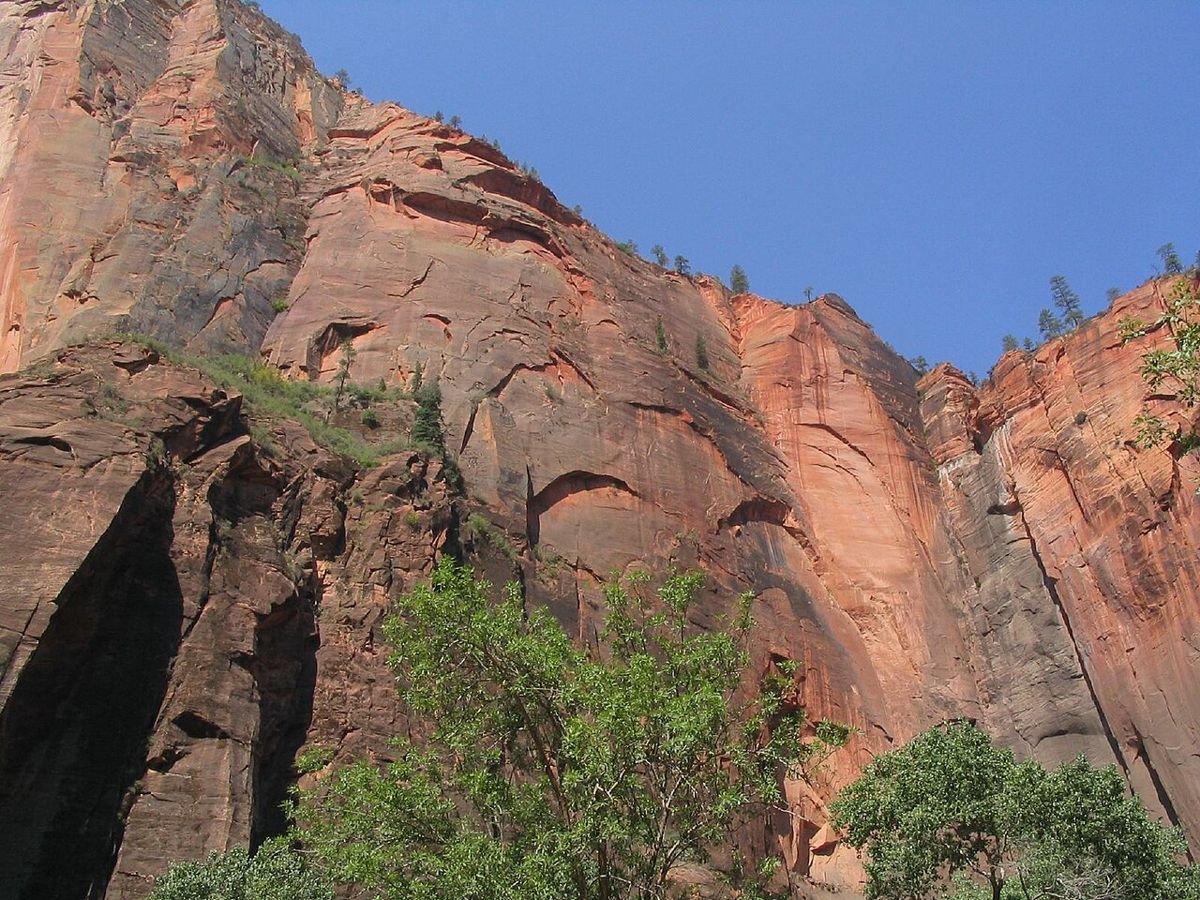
Zion Canyon is narrow, steep and very popular. The National Park Service began running shuttles in 2000 to reduce traffic and parking problems, protect vegetation and restore tranquility to the canyon. During shuttle season, private vehicles cannot drive the Zion Canyon Scenic Drive at all. That rule also applies before the first shuttle of the morning and after the last one in the evening, so you cannot slip up the canyon by car outside shuttle hours.
The upside is that the shuttle is easy. It is free, and the National Park Service states that you do not need a permit, ticket or reservation to enter the park or to ride it. You pay the park fee or show a valid pass, and that is all. Park in Springdale or at the visitor center, step on the bus, and let someone else handle the traffic.
How the two shuttle lines work
There are two lines. The Zion Canyon Line, marked with green signs, runs inside the park and serves nine stops. They include the Zion Canyon Visitor Center, Zion Lodge and the trailheads for Emerald Pools, Scout Lookout, Angels Landing, Weeping Rock and The Narrows. Buses arrive about every 5 to 10 minutes.
The Springdale Line, marked with orange signs, runs outside the park through the town of Springdale. It has nine stops, including the park's pedestrian and bike entrance at Zion Canyon Village, and buses come about every 10 to 15 minutes. If your hotel is in town, you can ride it to the park gate and switch to the canyon line without ever moving your car.
Two practical details help. You may get on and off at any open stop, so you can plan your day as a series of short hops. But you cannot board a bus heading up-canyon at Canyon Junction (stop 3) or the Human History Museum (stop 2), so most visitors start at the visitor center. Plan for the ride between the visitor center and the Temple of Sinawava to take about 45 minutes one way, which makes the full round trip about an hour and a half before you walk anywhere.
What to see and do
Zion Canyon Visitor Center (stop 1): start here for maps, current conditions and ranger advice.
Zion Lodge: a convenient place to board if you are staying there, and the access point for the Emerald Pools trails.
The Grotto (stop 6): the trailhead for Angels Landing, a steep and exposed route that requires a permit awarded by lottery. Many first-time visitors skip it and still have a full day.
Weeping Rock (stop 7): a short walk to a rock alcove where water seeps from the cliff. The trail and its shuttle stop reopened in September 2025 after a rockfall closure.
Temple of Sinawava (stop 9): the end of the line and the start of the Riverside Walk, an easy and mostly paved path of about 2 mi round trip. It leads to the point where hikers enter The Narrows by wading upstream in the Virgin River. NPS notes that you do not need a permit to hike The Narrows upstream from the Temple of Sinawava.
Make a full day of it
Ride to the last stop first, early in the day. Walk the Riverside Walk in the early light, then ride back down and get off at whichever stops catch your eye. Pick one of the shorter trails, such as Weeping Rock, and keep the afternoon loose. If you have a second day, save it for a longer hike when the weather and the river allow.
Leave yourself time at the end of the day. Do not wait for the last shuttle of the day: if it is full or you miss it, you may have to walk about 9 mi back to the visitor center. Aim to board a bus well before the final departure.
Plan your visit
The shuttle schedule changes with the season. In most years, the NPS says, shuttles run daily from March through November and again for the holiday season near the end of December. For 2026, the park lists no service on either line from November 29 to December 25, with the canyon line resuming on December 26. The park also notes that winter, when the shuttles are off, is one way to see the Zion Canyon Scenic Drive without riding a bus. Check the NPS shuttle page for the dates and hours that apply to your trip before you book anything, along with river conditions on The Narrows and any permit rules.
Even during shuttle season, you can still drive your own car on the Zion-Mt. Carmel Highway, the Kolob Terrace Road and the Kolob Canyons Scenic Drive. If you drive to the main canyon, park lots often fill early in the day; paid parking is available in Springdale, and the free Springdale Line will take you to the park entrance. On the buses there is no eating or smoking, only capped bottles of water are allowed, and pets cannot ride.
Las Vegas (LAS) and St. George Regional (SGU) are both practical gateways. Carry water, wear sturdy shoes and bring layers: the canyon is shaded early and late in the day. Allow most of a day for the canyon, and if you can, stay in or near Springdale so that the first shuttle is a short walk away.
Frequently asked questions
Do I need a reservation for the shuttle?
No. NPS states that you do not need a permit, ticket or reservation to enter the park or to ride the shuttle. You only need to pay the park fee or have a valid pass.
Can I drive my own car up the canyon?
Not during shuttle season, including before and after shuttle hours. Check the NPS shuttle page for the dates that apply to your trip.
How long does the ride to the end of the canyon take?
About 45 minutes from the Zion Canyon Visitor Center to the Temple of Sinawava, so allow about an hour and a half for the round trip.
Do I need a permit for Angels Landing?
Yes. NPS requires a permit, awarded by lottery, for everyone who hikes it. The Narrows upstream from the Temple of Sinawava needs no permit.
Sources
- Zion Canyon Shuttle System · National Park Service
- Angels Landing Permits & Hiking · National Park Service
- Riverside Walk · National Park Service
- The Narrows · National Park Service
- Zion National Park reopens Weeping Rock Trail and shuttle stop · National Park Service