Skyblog · Special places
Haleakalā Sunrise on Maui: How the Reservation Works and How to Plan It
Watching sunrise at Haleakalā needs an advance reservation. Here is how it works, when to book and what to pack for the summit.
Published November 20, 2026
Why Haleakalā at sunrise needs planning
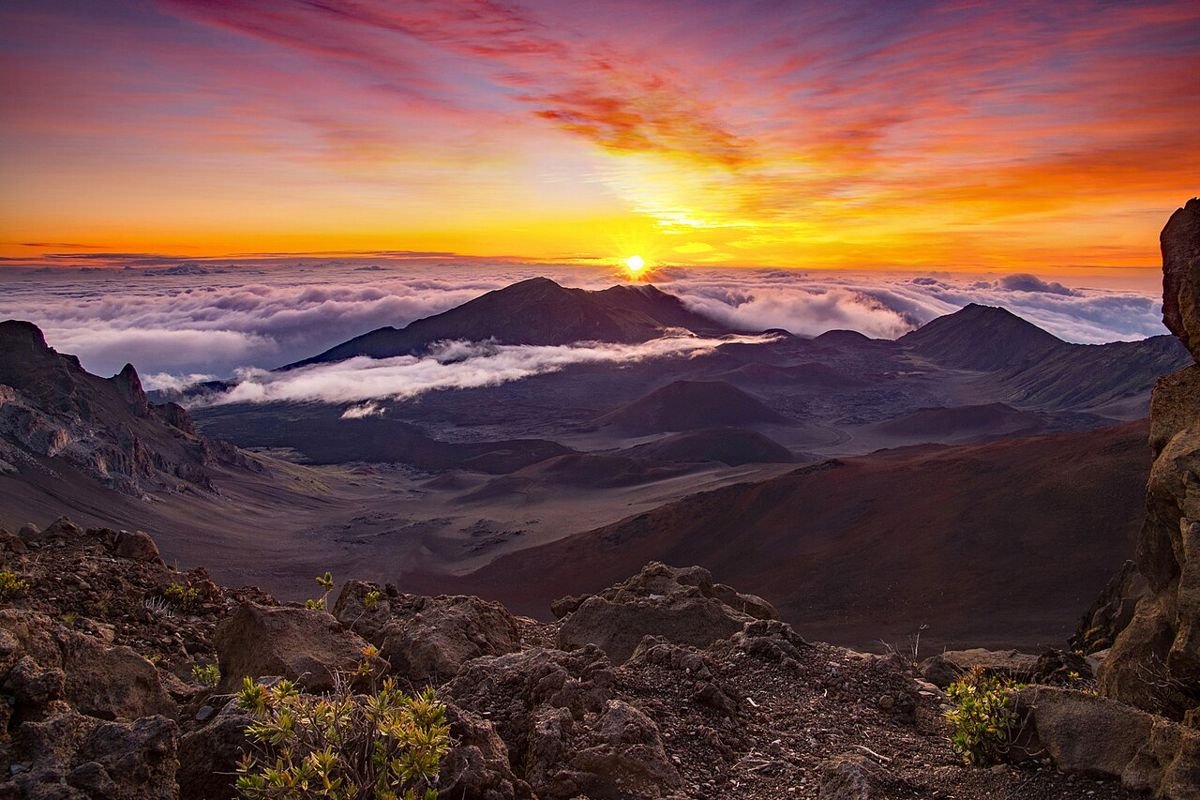
Haleakalā is a huge volcano that rises above the clouds on Maui, and its summit crater is one of the most dramatic places in the islands to watch the sun come up. That is exactly why entry for sunrise is limited. To visit the summit district between 3 and 7 a.m., you need a sunrise reservation booked ahead of time on Recreation.gov. Calling the park or showing up in person will not get you one, and park staff cannot make reservations for you.
The reservation is for one vehicle on one day, and it is not refunded or exchanged because of weather. Sunset and stargazing do not require a reservation, which makes them a good fallback if you cannot get a sunrise slot.
How the booking works
Reservations are released online up to 60 days before your visit, at 7:00 a.m. Hawaii time. A portion of the reservations for any given day is released two days (48 hours) in advance, which gives a second chance if you miss the first release. A visitor can buy only one sunrise reservation per three-day period, so you cannot stack several mornings to improve your odds.
On Recreation.gov you choose the date, select the 3:00 a.m. to 7:00 a.m. option and book one vehicle. Make an account beforehand and be ready at release time. For help with the booking site, the Recreation.gov help line is 1-877-444-6777.
At the entrance station the reservation holder must be present with a valid photo ID and the confirmation, along with your park pass or a way to pay the entrance fee. Plan to pay with a credit card. Print your reservation: cars with sunrise reservations must display the printout on the dashboard. The entrance fee itself covers both districts of the park for three days, so keep your receipt.
What to see and do
The sun rises over the crater walls, and NPS lists four viewing locations. From highest to lowest, they are the Puʻuʻulaʻula (Red Hill) summit at 10,023 ft, the Haleakalā Visitor Center at 9,740 ft, Kalahaku Overlook at 9,324 ft and Leleiwi Overlook at 8,840 ft. All four have views of sunrise over the crater when the weather cooperates, and no specific parking lot is guaranteed. Kalahaku and Leleiwi are the choices for a more solitary morning. Leleiwi is a 0.3 mi round trip from its parking lot, on a trail that rises in steps about 100 ft to the crater's edge.
After the sun is up, stay for a short walk. The summit district has hiking trails through a cinder-desert landscape and native shrubland, and Hosmer Grove is a popular place to look for native birds. Haleakalā is sacred to Native Hawaiians, so keep your voice low, and do not disturb anyone you see practicing cultural traditions.
Make a full day of it
Because sunrise starts so early, many visitors treat it as the first half of a slow day. Watch the sunrise, take a short walk, then drive back down for breakfast and rest. Another option is to come back in the evening for sunset and the night sky, which do not require a reservation. Staying overnight in the park is allowed only in designated campgrounds, Hosmer Grove in the summit district or Kīpahulu in the coastal district, and sleeping in a vehicle outside a campground is prohibited.
Plan your visit
Start early. Parking is restricted to designated lots, and each lot closes when it is full. Cars without a sunrise reservation are turned around at the entrance and cannot enter the summit district until after 7 a.m. Reservations go fast: the NPS says the online inventory often sells out within fifteen minutes of its 7 a.m. release. The drive from the entrance gate to the summit takes about 30 minutes on a road with no streetlights or guard rails, so leave extra time.
Dress for cold. Temperatures at the summit are at least 20 degrees colder than at sea level and often drop below freezing, and the hour before dawn is regularly wet and windy. There is no food, clothing or gas for sale in the park, so fill the tank and bring water, snacks and warm layers. There are no charging stations for electric vehicles, and even fully charged electric cars have been unable to reach the summit. Emergency help is at least an hour away.
If you prefer not to drive in the dark, NPS lists commercial sunrise bus tours run by authorized concessioners. Check the park's alerts and conditions page before you go, because weather and road conditions can change.
A night-before checklist
Sunrise starts the evening before. Confirm your reservation email and photo ID, fill the gas tank, and pack water, snacks and every warm layer you own. Charge your phone, and check the park's alerts and conditions page for road or weather notices.
Work out your departure time from the 30-minute drive between the gate and the summit, add time to park and walk to your viewpoint, and set two alarms. Tell someone your plan if you are traveling alone, since the summit is remote and help is far away.
Frequently asked questions
Do I need a reservation for sunrise at Haleakalā?
Yes. To enter the summit district between 3 and 7 a.m., you need a sunrise reservation from Recreation.gov. The park cannot make reservations by phone or in person.
When do reservations open?
Online, up to 60 days ahead at 7:00 a.m. Hawaii time, with a portion released 2 days before. You can buy only one sunrise reservation per three-day period.
What if the weather is bad?
Reservations are not refunded or exchanged because of weather. Dress for cold and wet conditions, and check the park's alerts before you drive up.
Is there a way to visit without a sunrise reservation?
Yes. Sunset and stargazing do not require a reservation, and you can also look into a guided sunrise tour offered by an authorized concessioner.
Sources
- Sunrise · National Park Service
- Summit District · National Park Service
- Haleakalā Sunrise Reservations FAQ · National Park Service
- Permits & Reservations · National Park Service
- Leleiwi Overlook · National Park Service